

Modern supply chains often involve multiple layers: suppliers, wholesalers, sub-consignees, and field technicians. This guide explains how multi-entity consignment works and how to manage it effectively.
A model including:
Managing consignment stock means tracking:
Every action needs a timestamp, an ownership state, and a clean audit trail.
Without a structured system, this becomes messy fast.
The multi-entity consignment model appears in any industry where products need to be physically distributed across multiple people, locations, or teams, while ownership remains upstream until the moment of use or sale.
Below are the most common environments where this structure naturally fits.
Trade & Technical Services
Retail & Consumer-Facing Networks
Healthcare & Medical Environments
Manufacturing & Operational Teams
Agriculture & Food Supply
Creative & Specialty Industries
In multi-layered supply chains, stock does not remain solely with the primary consignee. It often moves further downstream — into the hands of people who perform the actual work.
Who is a sub-consignee?
A sub-consignee is a downstream user or location that holds or uses consigned stock on behalf of the primary consignee. Examples include:
Why sub-consignee logic matters
Even though stock physically changes hands, ownership does not.
Ownership must remain traceable back through each movement.
This creates a chain:
Consignor → Consignee → Sub-consignee → Customer
Each hop in the chain must be recorded with:
Without this structure, consignment collapses into untracked inventory.
In real-world operations, stock rarely stays in one place. Businesses often need to move consigned stock across multiple locations or parties.
Common cross-entity movement patterns
Why this matters
Every transfer impacts:
Traditional inventory systems can’t track this complexity — especially when multiple parties participate in the same job.
Cross-branch movement must follow a structured, timestamped, fully auditable process.
Customer usage — or consumption — is the moment consignment triggers financial action.
Usage drives three changes:
1. Reduction in stock
The quantity held by the consignee or sub-consignee decreases.
2. Transfer of ownership
Ownership passes from the consignor to the consignee (or from the consignee to the end customer, depending on the model).
3. Invoice generation
The used quantity becomes billable and is included in the cycle close.
Examples
In consignment, usage is the revenue trigger.
This is why usage must be:
Once multiple entities are involved, complexity grows exponentially. Below are the key risk factors.
1. Untracked movement
Stock changing hands without being logged creates discrepancies that accumulate over time.
2. Lost stock
Vans, job sites, subcontractors, and temporary storage areas increase loss exposure.
3. Unclear ownership
If timestamps and transfer links are missing, it becomes impossible to determine:
4. Timing errors
Backdating or future-dating transactions breaks the cycle structure and leads to disputes.
5. Disputes
Without audit trails, disagreements arise over:
6. Administrative overload
Multi-entity consignment cannot be managed with:
The system must enforce structure.
Consigna is engineered specifically for complex consignment environments with multiple layers of stock holders.
1. Sub-consignee flows built in
Consigna allows stock movement across:
Each movement is tracked and audited.
2. Transfer and usage timestamps
Every action records:
This ensures complete traceability and eliminates ambiguity.
3. Full audit tracking
Every item has a chain of custody:
From supplier → consignee → sub-consignee → job site → usage → invoice
Consigna preserves this chain automatically.
4. Real-time movement visibility
Live dashboards show:
Perfect for multi-branch wholesalers and field-service teams.
5. Cycle-based lockouts
Once a cycle closes:
This ensures reconciliation is clean, final, and dispute-free.
6. Purpose-built for field and branch operations
Consigna supports:
If stock moves across hands, Consigna can track it.

A clear explanation of the consignment relationship: who owns the stock, who holds it, who uses it, and when payment is triggered.
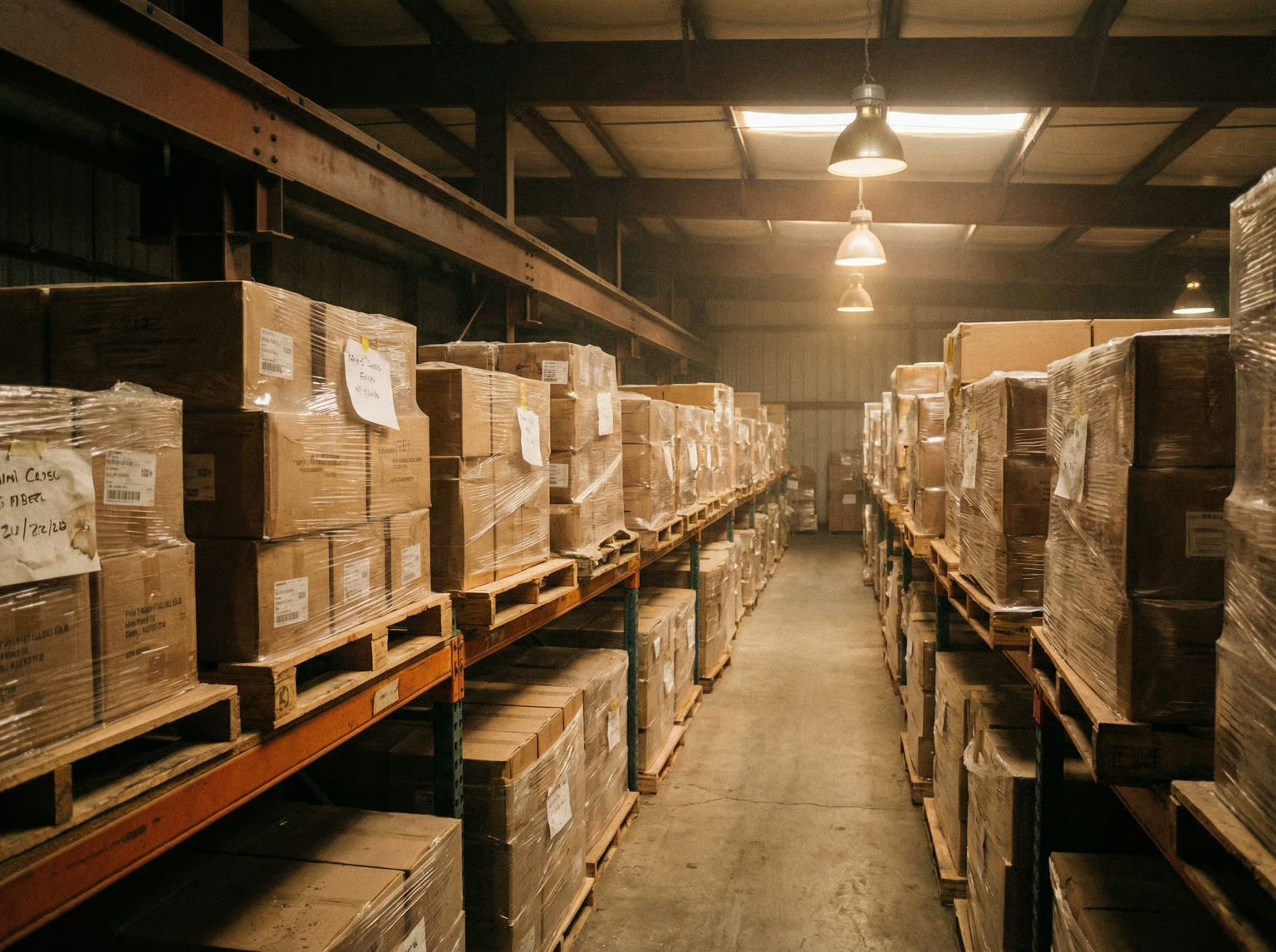
Stockholding is one of the largest hidden expenses in supply-chain-driven businesses. This guide details the true cost of holding inventory and how shifting stock closer to demand through consignment lowers costs while increasing sales.
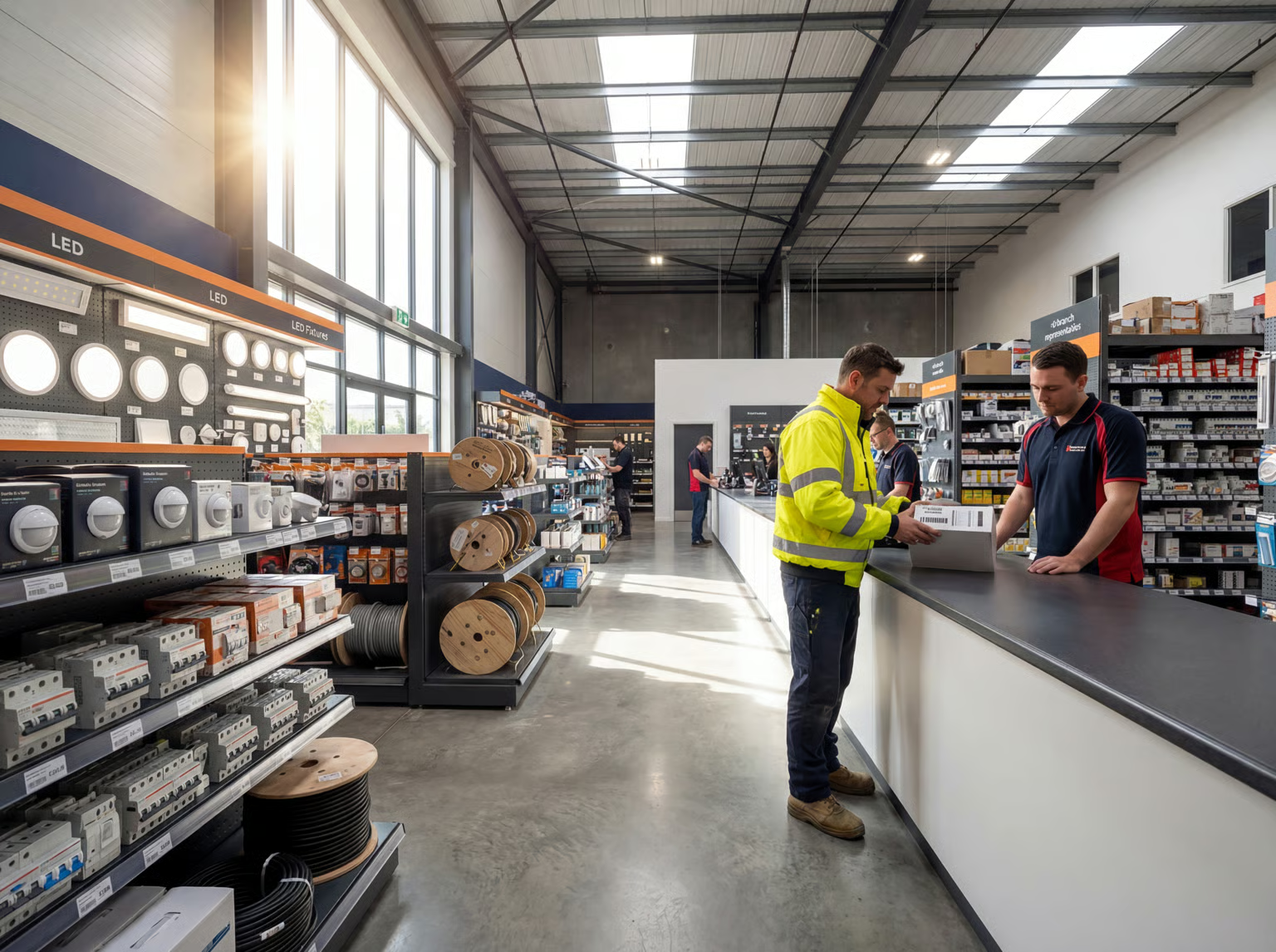
The electrical and lighting supply chain is fast-moving, fragmented, and heavily dependent on immediate product availability. Consignment stock solves the visibility, availability, and capital-loading issues that restrict sales, but only if the process is managed systematically.