


Consignor vs Consignee: Roles, Responsibilities, and Ownership in Consignment Models

Understanding the relationship between consignor and consignee is the foundation of a successful consignment program. This guide clarifies the roles, responsibilities, ownership rules, financial implications, and operational flows for both parties — including real-world examples across retail, trade, healthcare, and multi-site industries.

What Is a Consignor?

A consignor is the entity that owns the stock until it is sold, used, or consumed.

Consignors are typically:

  • suppliers
  • manufacturers
  • distributors
  • wholesalers
  • product brands

Key functions of a consignor

  • Makes stock available for consignment
  • Retains legal ownership until consumption
  • Manages upstream logistics and replenishment
  • Defines the consignment agreement terms
  • Tracks movements and usage
  • Issues invoices once stock is consumed

Consignor goals

  • Increase product visibility
  • Expand market reach
  • Reduce warehouse load
  • Improve inventory turns
  • Strengthen relationships with customers

A consignor’s profitability depends on accurate tracking and timely usage reporting.

What Is a Consignee?

A consignee is the entity that physically holds the stock but does not own it.

Consignees include:

  • wholesalers
  • retailers
  • trades businesses
  • franchisees
  • healthcare clinics (physios, chiropractors, podiatrists)
  • hospitality venues (restaurants, bars, hotels)
  • farm shops / local-produce retailers
  • subcontractors
  • mobile service teams


Key functions of a consignee

  • Holds the consigned stock at their location(s)
  • Sells or uses the stock
  • Maintains stock security and basic inventory handling
  • Reports usage and returns
  • Participates in reconciliation cycles


Consignee goals

  • Offer more stock without using working capital
  • Increase customer satisfaction and revenue
  • Reduce procurement delays
  • Minimise admin work


Consignees benefit from frictionless access to inventory without carrying full financial risk.

Ownership Rules

Ownership is the defining principle of consignment.

Ownership remains with the consignor until:

  • the consignee sells the product
  • the consignee uses the product
  • the cycle closes and usage is confirmed
  • the subcontractor or field tech consumes the item

Ownership transfer triggers include:

  • point-of-sale transaction
  • consumption / utilisation of products
  • clinic use or sales of consumables or devices
  • restaurant sale of consigned wine or specialty items
  • farm shop sale of artisan food or produce

Why ownership rules matter

Ownership defines:

  • liability
  • insurance
  • capital impact
  • revenue recognition
  • GST/VAT implications
  • replenishment logic

When ownership transitions incorrectly, reconciliation becomes unreliable.

Suppliers

Sell more without discounting or losing control

Consignment allows suppliers to place stock closer to customers without being paid upfront. You retain ownership until the stock is sold. When done properly, consignment increases conversion, reduces sales pressure and builds long-term customer loyalty.

Learn more

Consignor Responsibilities

1. Supply & Replenishment

Ensure adequate levels of stock in each consignee or sub-consignee location.

2. Visibility & Reporting

Track inventory across all entities, including vans and job sites.

3. Cycle Management

Open, monitor, and close reconciliation periods.

4. Billing & Documentation

Generate invoices according to:

  • usage
  • agreed pricing
  • cycle close
  • contract terms

5. Dispute Management

Provide clear audit trails for any discrepancies.

Consignee Responsibilities

1. Stock Storage & Handling

Hold stock in good condition, secure and accessible.

2. Sell or Use Stock

Sell the stock to customers or use it during service delivery.

3. Record Movements

Capture:

  • usage
  • returns
  • transfers
  • adjustments

4. Participate in Cycle Reconciliation

Confirm final closing balances.

5. Protect Ownership and Accountability

Ensure sub-consignees follow the agreed processes.

Examples Across Industries

Trade & Construction

  • Electrical wholesalers hold lighting and switchgear on consignment from suppliers.
  • HVAC suppliers provide parts to contractors as van stock.
  • Plumbing contractors keep consumables on consignment for emergency work.


Retail

  • Homeware stores hold décor, fragrance, and small appliances on consignment.
  • Farm shops sell local produce sourced from farmers on consignment.
  • Artisan food producers stock cafés and delis on consignment.


Healthcare

  • Physiotherapists sell braces, supports, and consumables on consignment.
  • Clinics hold rehabilitation products for immediate patient access.
  • Hospitals store implants and devices in theatres on consignment.


Hospitality

  • Restaurants carry premium wines or spirits on consignment.
  • Hotels offer curated items from local artisans on consignment.


Manufacturing & Industrial

  • Field technicians receive parts on consignment directly from manufacturers.
  • On-site MRO (maintenance, repair, operations) teams hold stock to reduce downtime.


Each industry uses consignment to solve the same problem: stock must be available where the work happens — without locking up capital.

Common Misunderstandings

Misunderstanding 1: Consignment is “free stock”

No — it’s owned by the supplier until usage.

Misunderstanding 2: The consignee has no responsibility

False — they must handle storage, usage, security, and reporting.

Misunderstanding 3: Consignment works without structured tracking

Incorrect — untracked movement leads to disputes and revenue loss.

Misunderstanding 4: Consignment is only for large businesses

Clinics, cafés, farm shops, and single technicians also use consignment effectively.

Misunderstanding 5: It’s the same as vendor-managed inventory (VMI)

Not quite — consignment is about ownership transfer, not just replenishment.

Financial Impact

For Consignors

  • Lower warehouse congestion
  • Reduced carrying cost
  • Faster product adoption
  • Higher sales velocity
  • Improved customer retention

For Consignees

  • Zero upfront stock cost
  • Larger range → more sales
  • Higher service levels
  • Faster job turnaround
  • Less procurement overhead

Consignment aligns financial incentives for both sides.

Multi-Entity Consignment

Managing Stock Across Complex Chains

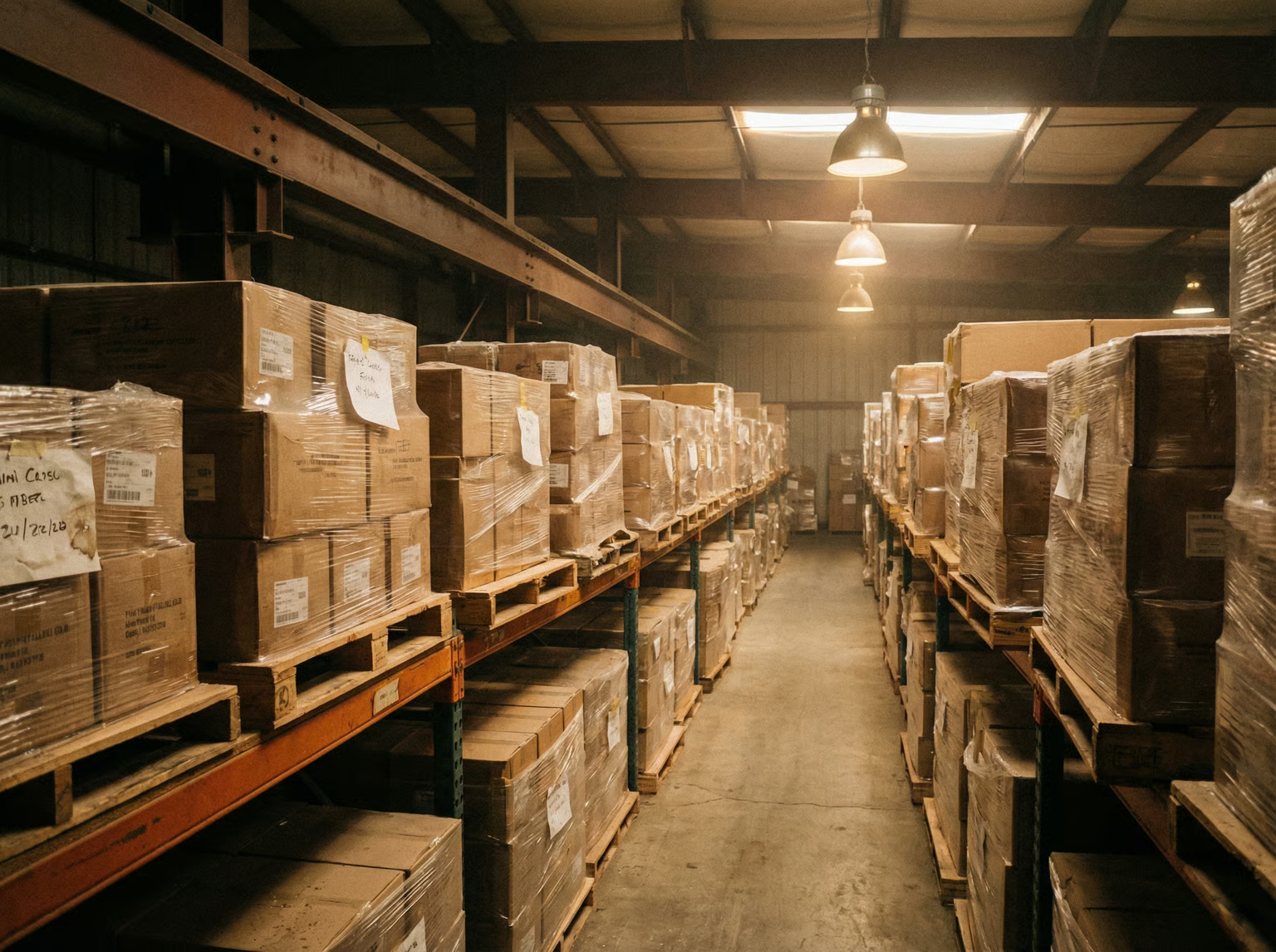
Modern supply chains often involve multiple layers: suppliers, wholesalers, sub-consignees, and field technicians. This guide explains how multi-entity consignment works and how to manage it effectively.
Read more
How to reduce stockholding costs
Stockholding Costs

How to Reduce Stockholding Costs Without Reducing Stock Levels

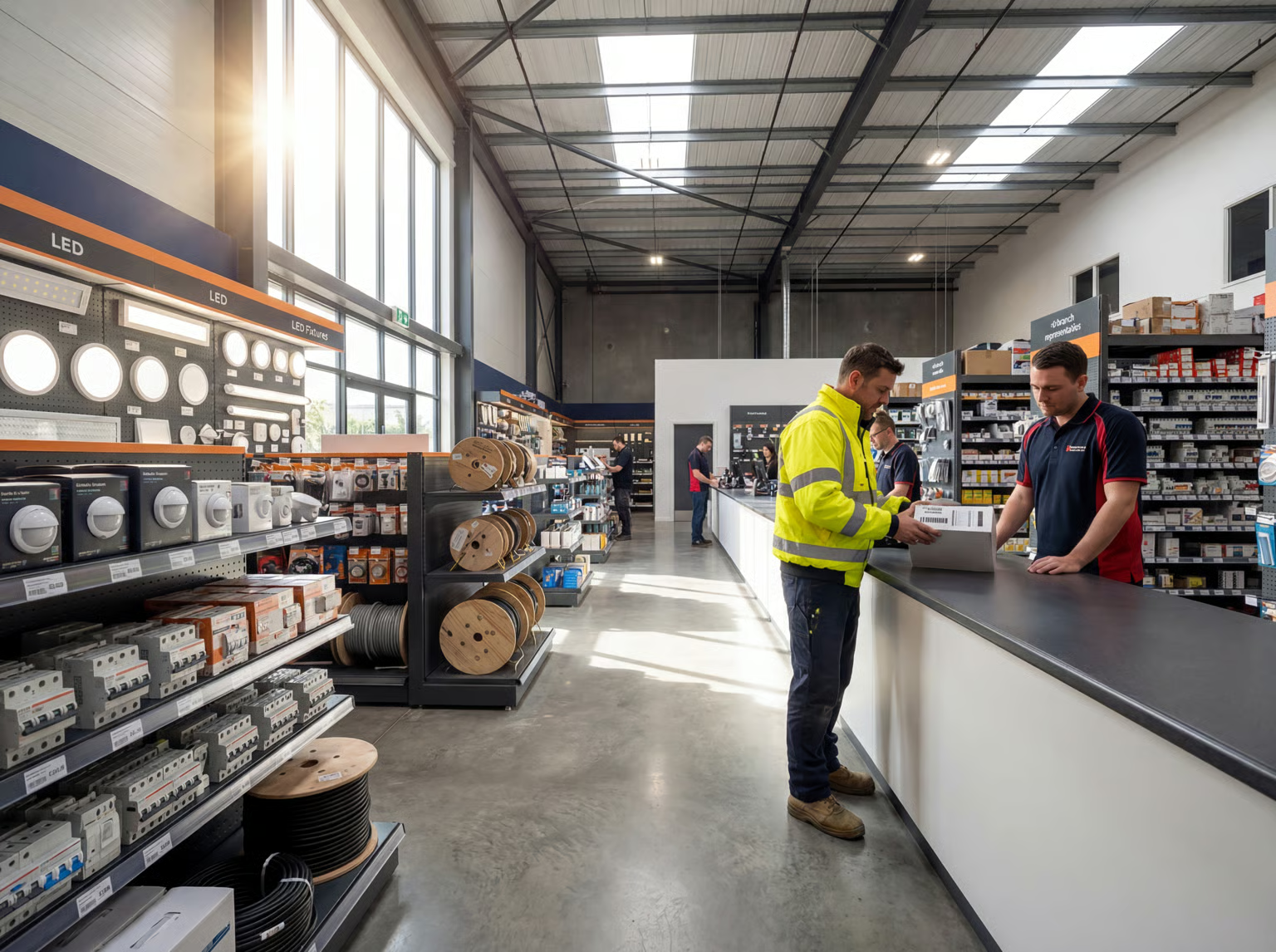
Stockholding is one of the largest hidden expenses in supply-chain-driven businesses. This guide details the true cost of holding inventory and how shifting stock closer to demand through consignment lowers costs while increasing sales.
Read more
Electrical Distributors

Consignment Stock for Electrical Distributors: A Practical Guide

The electrical and lighting supply chain is fast-moving, fragmented, and heavily dependent on immediate product availability. Consignment stock solves the visibility, availability, and capital-loading issues that restrict sales, but only if the process is managed systematically.

Read more

Start Managing Consignment the Modern Way

Streamline transfers, close cycles cleanly, and automate reconciliation. Built for scale, from a single contractor to a national distribution network.