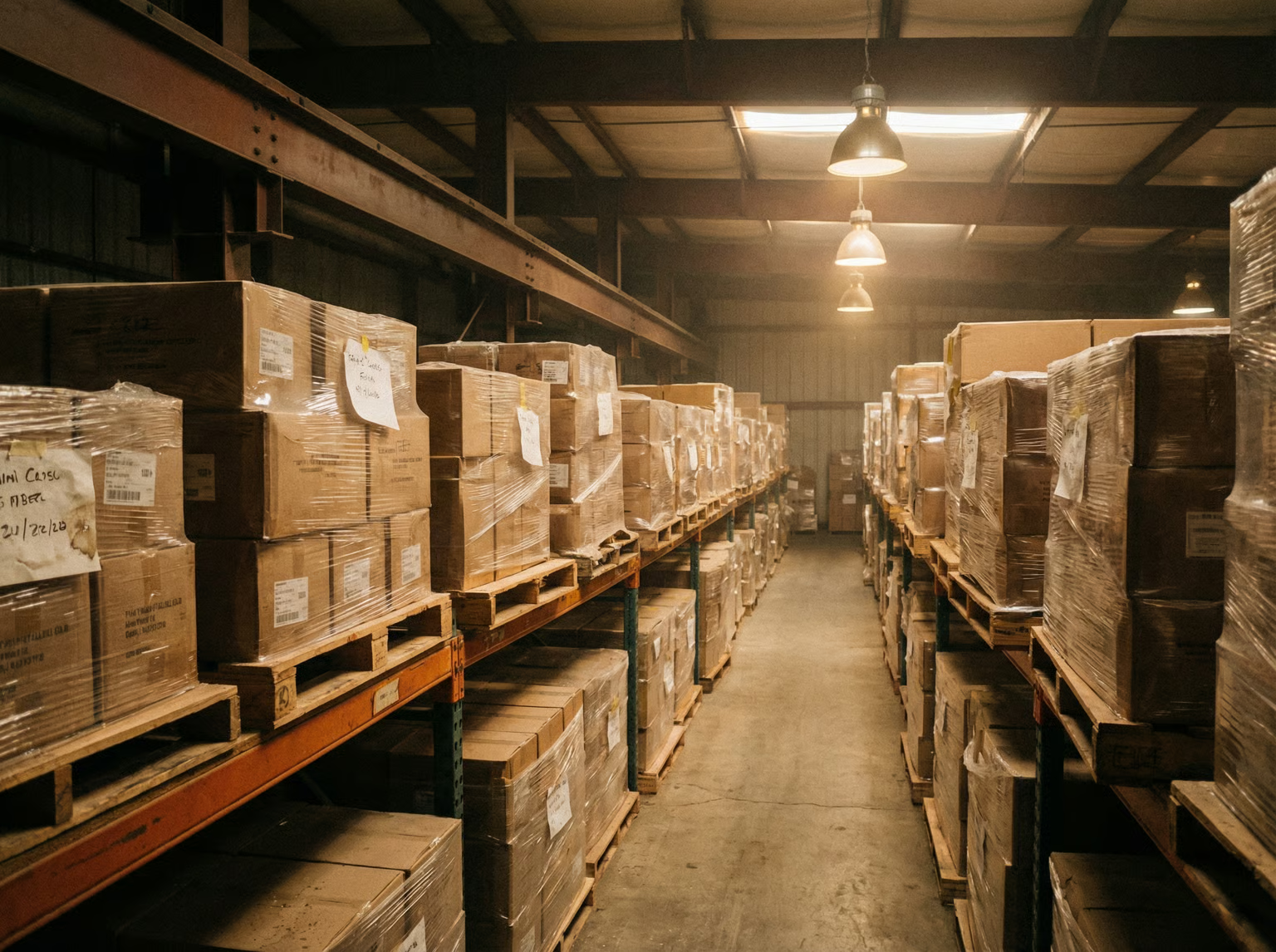
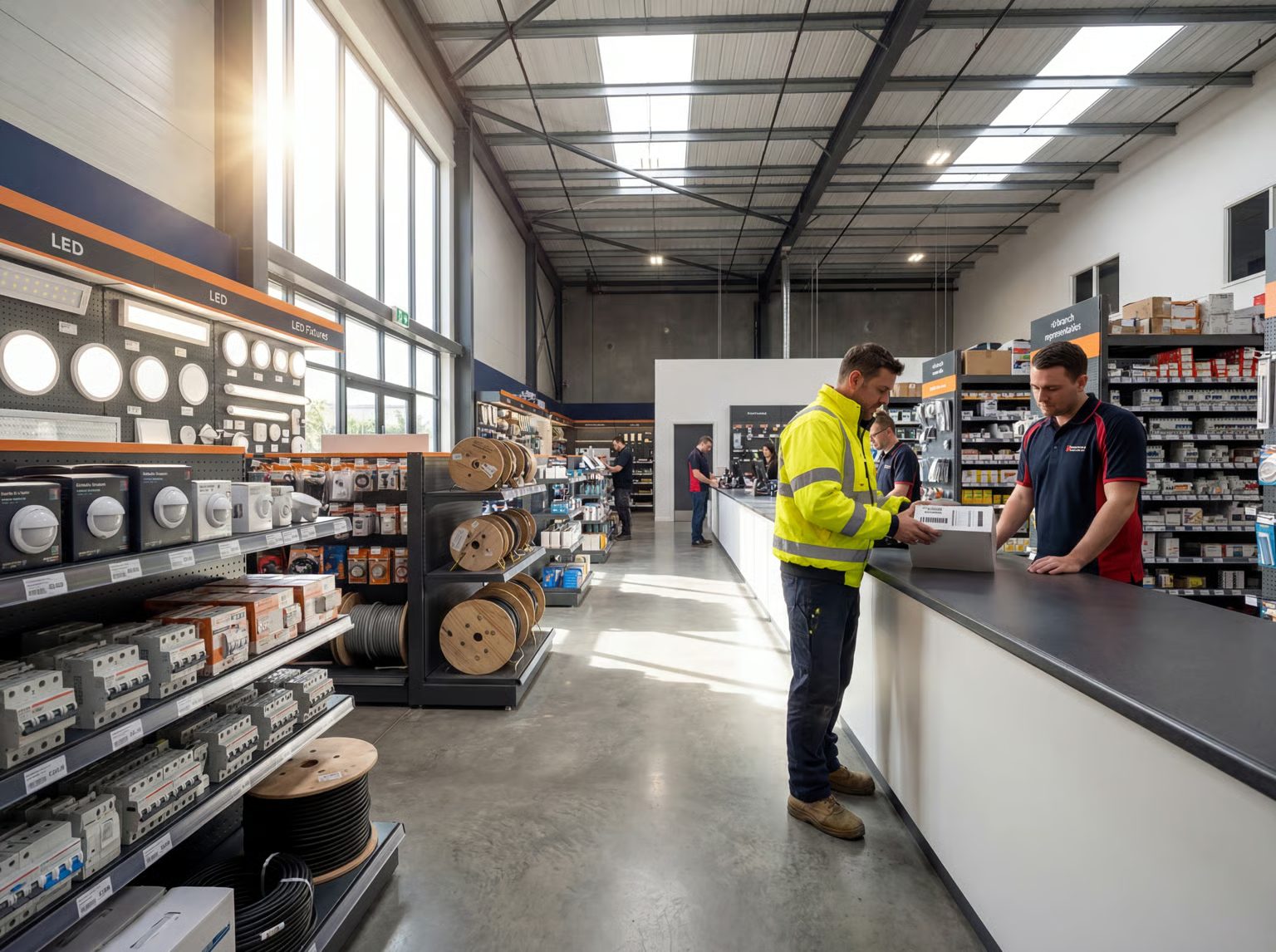
Stockholding is one of the most underestimated, misunderstood, and expensive components of running a product-based business. While most companies track “inventory value”, very few track the real cost of holding it.
This playbook breaks down the hidden costs of inventory, how they impact your P&L and cash flow, and how consignment stock — when done properly — dramatically reduces stockholding costs while increasing sales and product availability.
Stockholding cost is the total cost a business incurs by keeping inventory in storage, on shelves, in warehouses, or across branches. It is not just the purchase price of the product — it’s everything required to keep that product sitting still.
Stockholding cost categories include:
1. Warehousing Costs
Warehousing can absorb 5–15% of total inventory cost annually.
2. Labour Costs
Every manual process adds incremental cost.
3. Insurance & Compliance
As stock grows, so do premiums and compliance overhead.
4. Capital Cost of Money
This is the big silent killer.
Every dollar tied up in inventory is a dollar not generating return elsewhere.
If your cost of capital is 8–12%, your stockholding cost is at least 8–12% annually — before even touching warehousing or labour.
5. Depreciation & Obsolescence
Certain industries suffer heavily from product ageing:
Every year, a percentage of stock becomes:
This is often 5–20% of annual inventory value.
6. Shrinkage
Shrinkage includes:
Across industries, shrinkage averages 1–3%, but in multi-branch networks with vans and subcontractors, shrinkage can easily exceed 5–8%.
7. Slow-Moving and Dead Stock
SKU proliferation creates:
Dead stock directly absorbs cash flow and consumes warehouse space without ever producing revenue.
Combined Holding Cost Impact
Most suppliers underestimate stockholding by 50–70%.
The real number usually lands between 20–30% of inventory value per year.
For a business holding $1M in stock, the annual stockholding cost is typically $200k–$300k.

Inventory becomes expensive when:
1. Inventory Turns Are Too Low
Low turns = slow cash recovery.
Slow recovery increases cost of capital and warehouse dwell time.
2. SKU Complexity
More SKUs = more:
3. Uncertain Demand Patterns
Industries like lighting, retail, HVAC, and homewares face:
These patterns make forecasting difficult — leading to excessive buffer stock.
4. Multiple Storage Locations
Branches, vans, subcontractors, job sites — these multiply friction and risk.
5. High-value parts sitting idle
Every expensive SKU sitting still is a financial anchor.
Consignment transfers the stock from the supplier’s warehouse to the point of demand — without transferring ownership until usage.
This has several benefits:
1. Lower Warehouse Load
Stock leaves the supplier’s warehouse and moves to customer locations.
This reduces:
2. Improved Inventory Turns
Stock sells faster because it’s:
Faster turns reduce depreciation, shrinkage, and cost of capital.
3. Reduced Capital Load
Because suppliers retain ownership until usage:
4. Shift from “Warehouse Stock” to “Demand Stock”
Stock in warehouses is cost.
Stock in customer hands is opportunity.
Consignment shifts stock toward revenue-generating locations.
5. Stronger Customer Loyalty
Consignees become dependent on high-availability stock, making the relationship stickier and more difficult for competitors to disrupt.
If it feels harder than it should, it’s not you. It’s the system. Consigna will change it.
Example A: Electrical Supplier
Inventory: $500,000
Holding cost (25%): $125,000
Consignment shift: 40%
Savings: ~$50,000 annually
Additional sales growth: +12% because product availability increased in branches.
Example B: Healthcare Clinic Network
Clinics often carry expensive braces, supports, and consumables.
Annual inventory: $200k
Stockholding cost (30%): $60k
Consignment shift: 60%
Savings: ~$36,000
Additional revenue: faster patient access → increased conversion rate.
Example C: Retail Homewares Distributor
Warehouses overflowing with diverse, slow-moving SKUs.
Inventory: $1.2M
Holding cost: $360k
Consignment shift: 30%
Savings: ~$108k
Additional benefit: dead stock drastically reduced.
Consigna is built to reduce stockholding cost by shifting stock closer to demand while automating every part of the consignment process.
1. Identify Slow-Moving SKUs
Consigna highlights:
2. Push Stock to High-Demand Locations
Suppliers can place stock where:
3. Granular Usage Tracking
Every unit of stock is:
This prevents leakage and shrinkage.
4. Automatic Cycle Close
Removes manual:
5. Reduce Shrinkage Through Accountability
Because every movement is logged:
6. Enable Accurate Invoicing
Usage → Billing → Clean audit trail.
No more:
7. Field Team Enablement
Consigna gives field staff access to stock movement tools:
This reduces hoarding, over-ordering, and loss.
Modern supply chains often involve multiple layers: suppliers, wholesalers, sub-consignees, and field technicians. This guide explains how multi-entity consignment works and how to manage it effectively.
A clear explanation of the consignment relationship: who owns the stock, who holds it, who uses it, and when payment is triggered.
The electrical and lighting supply chain is fast-moving, fragmented, and heavily dependent on immediate product availability. Consignment stock solves the visibility, availability, and capital-loading issues that restrict sales, but only if the process is managed systematically.