
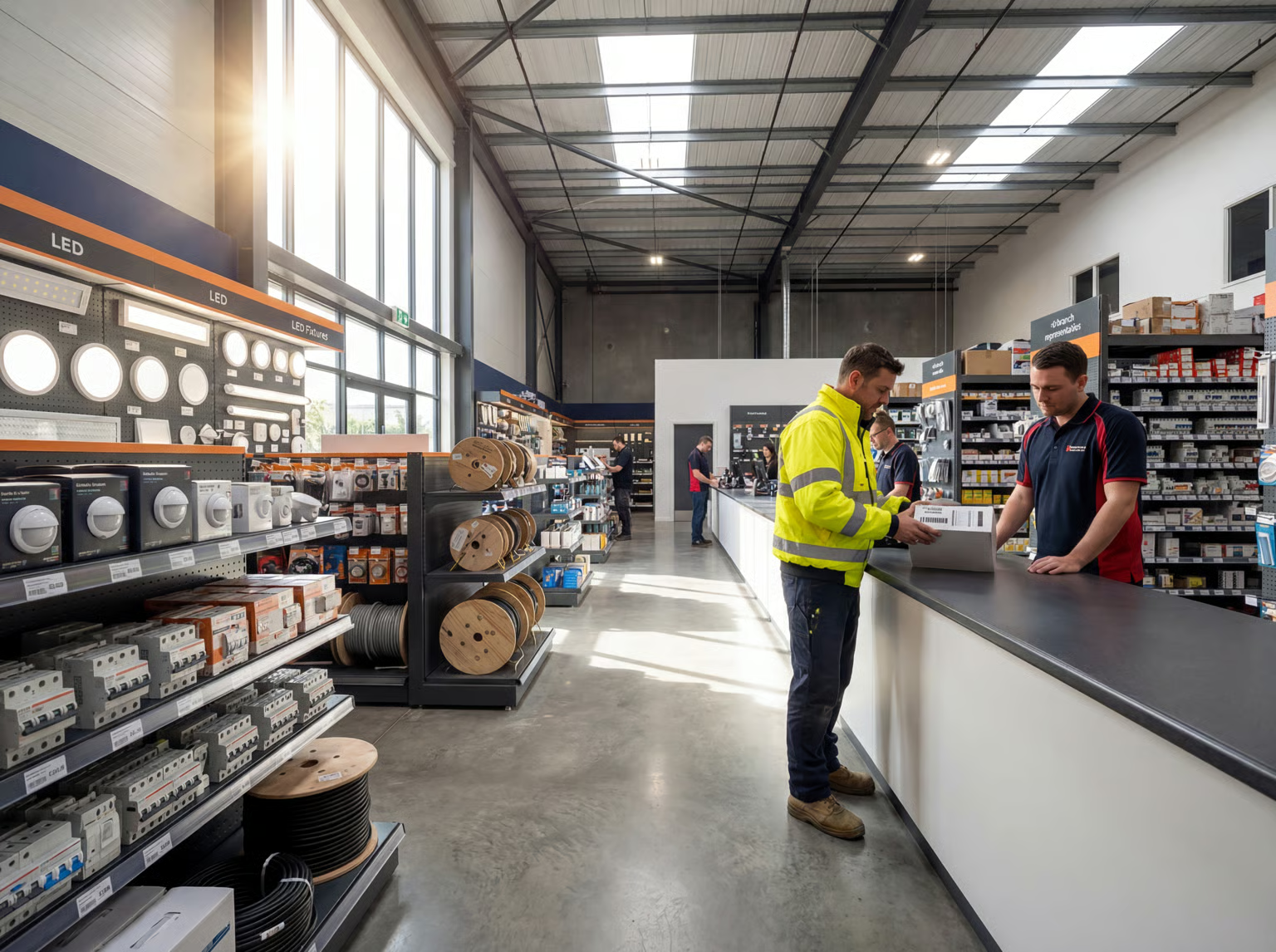
Electrical wholesalers and lighting distributors operate in one of the most dynamic, fast-moving supply chains in the world. Job deadlines are non-negotiable, product ranges are extensive, and contractors demand immediate availability.
Consignment stock is one of the most effective ways to increase product visibility, reduce stockholding costs, accelerate branch sales, and strengthen supplier–customer relationships.
This guide explains how, why, and when electrical distributors use consignment — and how a proper consignment platform (like Consigna) eliminates the operational risks.
The electrical industry is uniquely suited to consignment because it depends on:
1. Fast, Unpredictable Demand
Contractors need stock now, not tomorrow.
Breakdowns, emergencies, and job variations all drive same-day purchasing. Having product on the shelf where contractors shop creates an immediate competitive advantage.
2. High SKU Diversity
Electrical wholesalers carry thousands of SKUs across:
The breadth of range increases holding costs dramatically.
3. Tight Job Timelines
Construction timelines don’t wait for stock replenishment.
Branches without the right stock lose the sale to competitors.
4. High Cost of Lost Sales
If a contractor needs:
… and the branch doesn’t have them, the entire project’s purchase often shifts to a competitor. Consignment helps ensure full-range availability.
5. First-Call Advantage
Wholesalers who have the stock become the contractor’s first call.
Consignment increases the chance you become that supplier.
Electrical distributors are constantly juggling:
1. Dead Stock in Warehouses
Slow-moving fittings and niche components pile up, tying up capital.
2. High Cost of Stockholding
Warehouses are expensive. Holding too many SKUs eats margin.
3. Branch Stock Imbalance
One branch is overstocked.
Another is out of stock.
Another is unsure what they have.
Consignment allows suppliers to rebalance more often and with reduced risk.
4. Lost Sales Due to Stockouts
Contractors simply drive to the next wholesaler.
5. Poor Visibility
Most wholesalers don’t know:
Consignment data fixes this.
6. Reconciliation Pain
Manual counts, disputes, and mismatched quantities create strain between branches and suppliers.
1. Strategic Stock Placement
Consignment enables suppliers to place stock in branches where it will move faster.
2. Better Range Without Capital Outlay
Wholesalers can carry a deeper range without spending upfront.
3. Higher Sales Velocity
Stock in front of contractors → more product movement.
4. Faster Contractor Turnaround
Contractors complete jobs faster when parts are immediately available.
5. More Accurate Demand Forecasting
Real-time usage data reveals genuine product trends.
1. Increased Market Reach
Suppliers can “own” shelf space in multiple branches, not just one.
2. Higher Product Visibility
The more visible your product, the more it sells.
3. Reduced Warehouse Congestion
Stock moves out of central facilities into locations where it’s more productive.
4. More Accurate Stock Turns
Consignment pushes stock closer to contractors, improving turns.
5. Reduced Pricing Pressure
Consignment builds loyalty — making price less of a deciding factor.
6. Lower Lost Sales Risk
Branches always have key SKUs available.
1. Zero Capital Risk
Wholesalers hold a wider range without upfront investment.
2. Bigger, More Attractive Shelf Offering
Contractors see more options — and stay loyal.
3. Faster Branch Performance
Branches can serve walk-ins and account customers without delays.
4. Reduced Administration
No need for:
The consignment cycle automates it.
5. Better Contractor Loyalty
Contractors choose the branch that always has stock available.
6. Higher Counter Sales
Better stock → better impulse purchases.
Consignment allows you to hold stock without paying upfront. You pay only when the stock is sold or used. That means better availability, fewer delays, better cashflow and less capital tied up.

Most networks follow this pattern:
Supplier (Manufacturer) → Distributor Warehouse (Consignor) → Branch (Consignee) → Contractor → Job Site
or
Supplier (Manufacturer) → Distributor (Consignor) → Contractor (Consignee) → Field Technicians / Job Site (Sub-Consignee)
Consignment allows:
Downstream movement becomes frictionless and traceable.
Electrical distributors often serve:
These people effectively act as sub-consignees.
Consignment enables suppliers to support entire contractor fleets — not just branches.
Lighting and electrical products sell best when:
Consignment increases:
The more often a contractor sees your product, the more likely they are to use it routinely.
Case Example A: Downlights
A supplier pushes 200 units across 10 branches.
Contractors see them daily.
Sales increase by 20–30%.
Major lighting manufacturers such as Philips and LEDVANCE rely on distributor-held stock to ensure contractors see their products daily — a proven way to lift sales by 20–30% through visibility alone.
Case Example B: Sensors & Control Gear
Contractors often replace these immediately when on-site.
Having them in branch counters increases on-the-spot purchases.
Global manufacturers like Schneider Electric and Legrand depend on immediate branch availability for sensors and control gear, where on-the-spot replacement drives incremental sales that would otherwise be lost.
Case Example C: Emergency Fittings
Regulatory compliance makes availability essential.
Consignment removes downtime and lost sales.
In regulated categories like emergency lighting, manufacturers such as Eaton and Thorn rely on distributor-held inventory to eliminate compliance delays and lost jobs.
Case Example D: Cable & Accessories
High-volume SKUs with steady demand.
Consignment stabilises supply without heavy investment from wholesalers.
High-volume suppliers such as Prysmian and Nexans rely on distributor-held inventory models to stabilise supply and support demand without forcing wholesalers to over-invest in stock.
Consigna is designed specifically for industries with high stock turnover and complex multi-entity movement.
1. End-to-End Visibility
Suppliers and branches see:
2. Automated Replenishment
The system highlights low stock across:
3. Clean Cycle-Based Reconciliation
Consigna eliminates reconciliation errors by enforcing:
4. Mobile Barcode Scanning
Simple → fast → accurate.
Field workers can log usage instantly.
5. Multi-Branch Logic
Designed for:
6. Fast and accurate reconciliations leading to faster Billing
Usage → audit trail → invoice.
Suppliers get paid faster.
Modern supply chains often involve multiple layers: suppliers, wholesalers, sub-consignees, and field technicians. This guide explains how multi-entity consignment works and how to manage it effectively.

A clear explanation of the consignment relationship: who owns the stock, who holds it, who uses it, and when payment is triggered.

Stockholding is one of the largest hidden expenses in supply-chain-driven businesses. This guide details the true cost of holding inventory and how shifting stock closer to demand through consignment lowers costs while increasing sales.